There is a phrase that sounds simple but can create a surprising amount of work for global marketing teams: “just translate the website.”
It sounds simple. It is not.
A translated site is not a finished thing you ship once. It is a living set of pages in five, ten, or twenty languages that need to stay aligned as the source content changes. And when an update gets missed, a market can end up with an outdated price, a missing disclaimer, or a promise the company no longer makes.
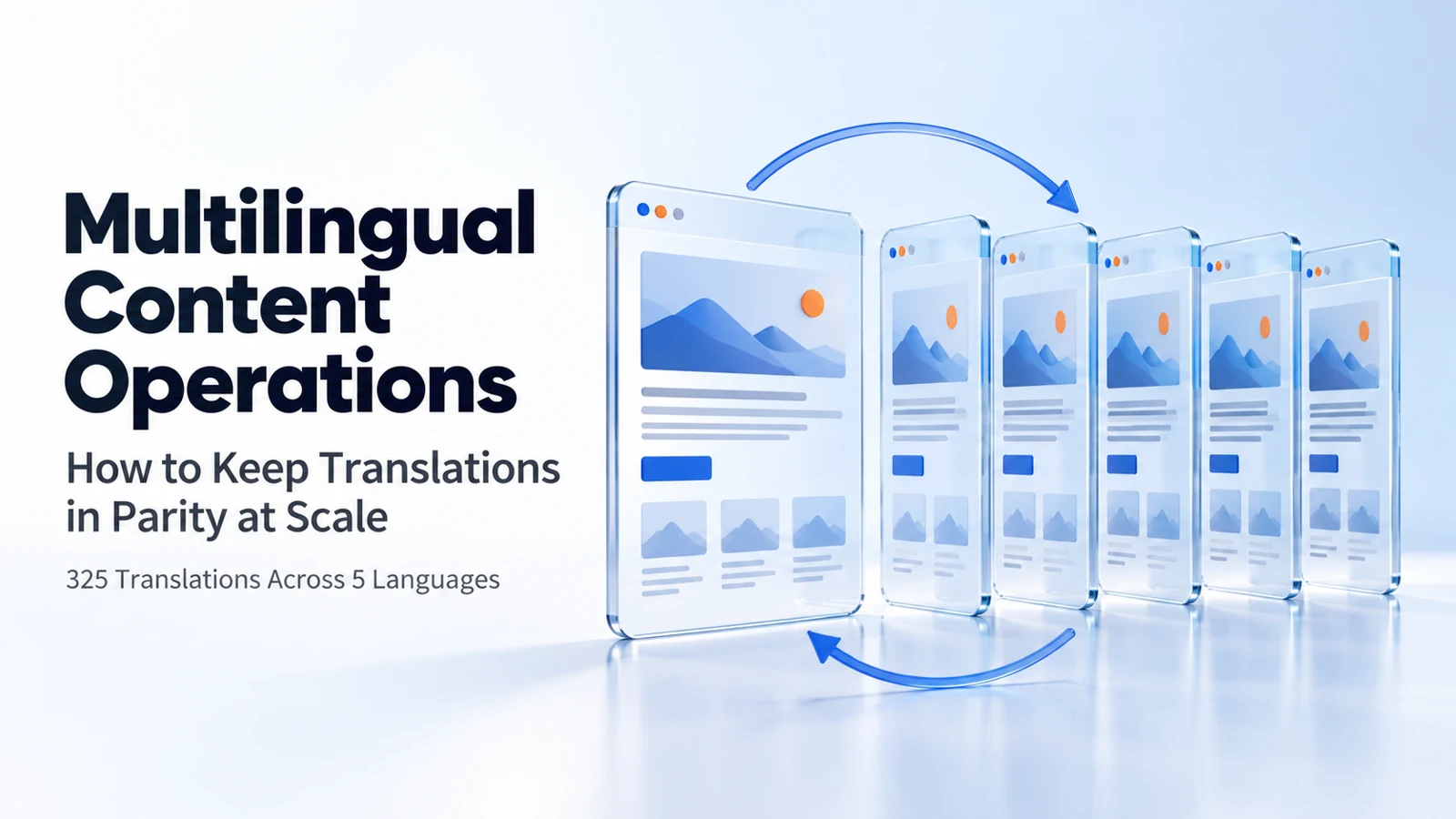
You keep multilingual content in sync across markets by treating translation as an ongoing operation, not a one-time project. That means one source of truth for every page, a defined process that triggers every language whenever the source changes, and a person accountable for parity across all markets.
Multilingual sites fall out of sync not because translation is hard, but because nobody owns keeping the languages aligned after the initial launch.
We have run this at scale. On one global manufacturer program, our team managed 325 translations across five languages, keeping content aligned through a structured process and maintaining a reported 99.5% accuracy rate.
9 Practices for Keeping Multilingual Content in Sync
Here is what actually keeps translations in sync when the volume is real.
1. Establish one source of truth
Every piece of multilingual content needs a clear source of truth, whether that is an English master page or an approved regional version that other languages follow.
When there is no clear source, teams start editing individual language versions directly, the languages diverge, and there is no longer a "correct" version to sync back to.
Parity begins with agreeing which version leads.
2. Make the source change trigger every language
The most common cause of drift is simple: someone updates the English page and nobody updates the other nine.
Your process has to make every source change trigger a review of the affected languages. If translation is needed, the work should be tracked until each relevant market is updated. Publishing the source is only one part of the job.
Until then, the site is out of parity, and you should be able to see that.
3. Give parity a named owner
Someone has to be accountable for the whole language set, not just individual translations.
This is the person who knows which languages are behind, which pages have drifted, and what needs to catch up. Without that ownership, each translator does their piece well and the overall site still falls out of sync, because no one is watching the whole picture.
4. Translate the structure, not just the words
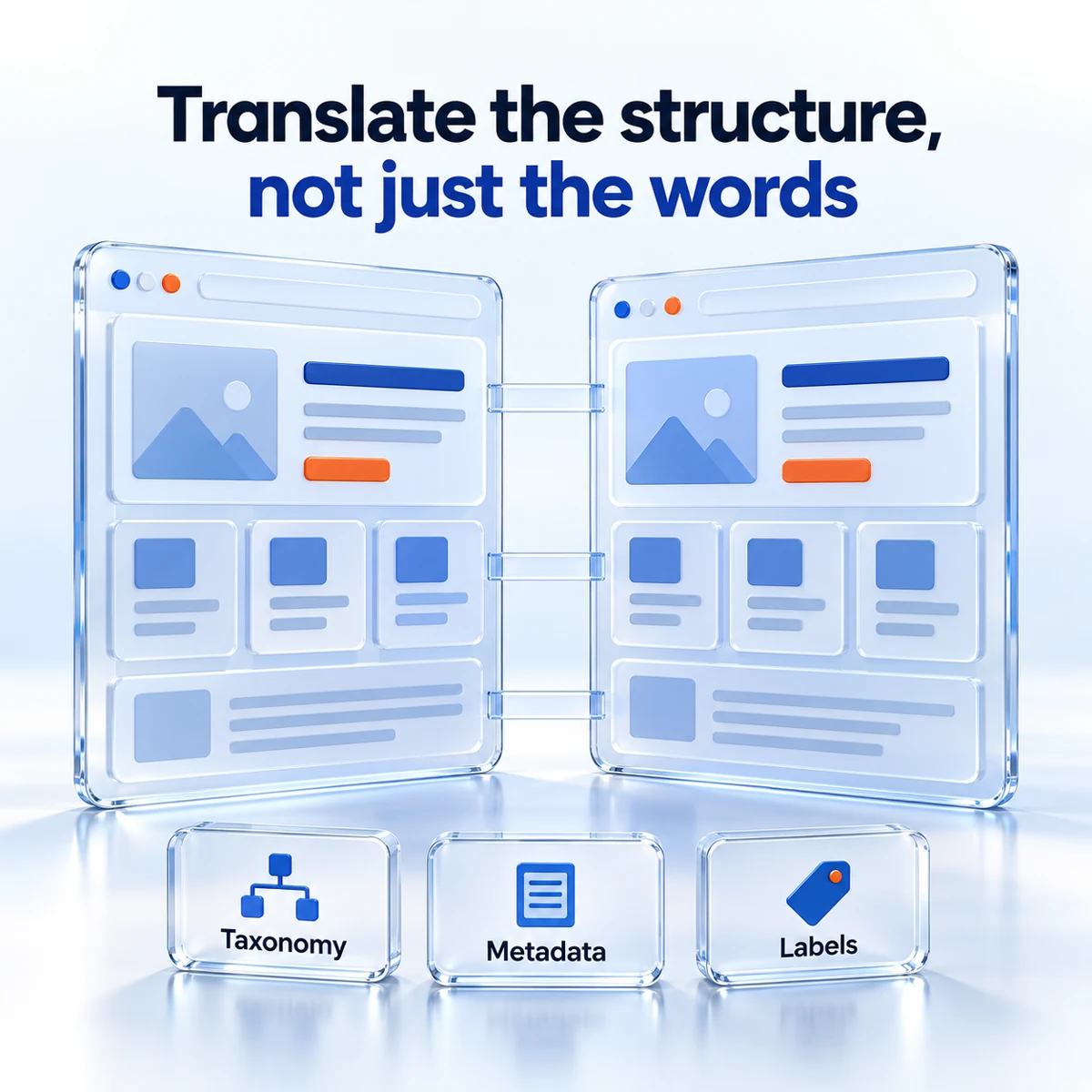
Parity is not only about the visible copy. Taxonomy, tags, dictionary items, metadata, and component labels all have to be translated and kept aligned, or the localized site works differently from the source even when the words are right.
On the manufacturer program, keeping translated taxonomy and metadata in step with the source was as important as the page copy itself, because that is what makes the localized experience actually function for the user in that market.
A user searching in German who cannot find the product because the tags were never translated is a real problem, even if every visible sentence on the site reads correctly.
5. Handle hreflang deliberately
Hreflang helps Google understand which language or regional version of a page is intended for different audiences.
Get them wrong and Google may show a page meant for one market to users in another, even when a more relevant regional version exists. On a large multilingual site these break easily and quietly, so they need their own check as part of the process, not an assumption that they are fine.
6. Build components to be translation-ready
A lot of translation pain comes from components that were never designed for other languages.
Text that overflows because German runs longer than English. Layouts that break because a language reads right to left. Fields that cannot hold a translated value. Character sets that render incorrectly.
Building translation-ready components from the beginning can save a lot of rework later. It is easier to plan for multiple languages upfront than to fix layouts and fields after translations start coming in.
7. Use AI translation with a human check, not instead of one
AI-assisted translation can speed up the work, especially when dealing with large volumes of content. But speed alone does not make a translation ready to publish.
But at enterprise scale, on compliance language, product claims, and regulated content, an unreviewed machine translation is a risk, not a shortcut.
The workflow that holds up is AI-assisted drafting with human review for accuracy and context. Speed from the tool, judgment from the person.
8. Keep compliance and disclaimers aligned everywhere
Disclaimers, compliance language, and regulatory text need to stay accurate and current in every market. Sometimes that means keeping translations aligned with the source. Other times, it means making sure the wording meets local requirements.
This is where drift becomes a bigger risk. An outdated disclaimer in one market can create compliance problems, not just a poor content experience.
These specific elements deserve their own tracking, so a change to compliance text in the source never lives in only one language.
9. Audit parity on a schedule
Even with a good process, languages drift.
Run a regular check comparing each language against the source to catch pages that fell behind. On a high-change site this might be monthly. On a lower-volume site, quarterly.
The point is to find drift on your schedule, through an audit, rather than on the customer's schedule, through a complaint.
One thing that makes a difference is having a clear view of what has changed and what is still pending. For every source update, the team should know which languages are affected, which translations are in progress, and which ones are ready to publish. Without that visibility, even a well-managed translation process can lose track of small changes over time.
The point of the playbook
Keeping translations in parity is not a translation skill. It is an operations discipline.
The translators can be excellent and the site can still drift, because parity is about the system that keeps every language aligned to the source over time, not about any single translation being good.
That system is content operations, and it is exactly what "just translate the website" leaves out.
Managing 325 translations across five languages while keeping content aligned does not happen by translating harder. It happens when the right process keeps every market connected as the source continues to change. It is the result of an operation built to keep languages in sync as the source keeps changing.

Establish one source of truth, make every source change trigger the corresponding work in every language, and give one person accountability for parity across all markets. Support it with translation-ready components, correct hreflang, and scheduled parity audits. Drift happens when the source changes and the other languages do not catch up.
Because the source content keeps changing and the translations do not keep pace, especially when no one owns the whole language set. Individual translations can be perfect while the overall site drifts, since parity depends on a process that syncs every language to the source, not on any single translation.
AI-assisted translation speeds up the work and is worth using, but at enterprise scale it needs human review, particularly for compliance language, product claims, and regulated content. The reliable model is AI drafting with human review for accuracy and context, not machine translation published unchecked.
More than translating copy. It involves keeping taxonomy, metadata, disclaimers, and component labels aligned across languages, managing hreflang correctly, building components to handle multiple languages, and auditing parity on a schedule. It is a content operations discipline, not a one-time translation task.
Map each page to its available language and regional versions, keep hreflang references consistent across those versions, and check them regularly, especially after content changes or migrations. Incorrect hreflang can make it harder for Google to identify the most relevant version for each audience.
Source content changes that never reach the other languages, individual language versions being edited directly without updating the source, translators working from outdated sources, and structural changes (like new components or fields) that get built for the source language only. A clear process helps catch these issues early and keeps them from becoming bigger problems across markets.